
Affiliate disclosure: Zignaly runs a "Refer a Friend" scheme but does not publish its terms, and we are not enrolled — this review earns us nothing from Zignaly. Some other links on this page are affiliate links, marked per our disclosure policy. Scores are set by our public testing methodology.
- Platform
- Web app — copy trading, no Telegram feed
- Model
- Profit sharing: you allocate, a trader executes
- Pricing (July 2026)
- No subscription — success fee taken from profit
- Minimum
- $10 to start
- Signal type
- Z-Indexes + profit-sharing services rated by Z-Score
- Discontinued
- Signal marketplace and DIY bots (per Zignaly, 2026)
- Affiliate program
- Refer a Friend — terms not public
- Risk level
- Moderate — no fee drag, but performance is unverified
Zignaly is a working platform with the fairest fee structure in this whole review series: nothing up front, a cut only when a strategy earns, and a $10 door. The problem is that half the internet still sells it as something it stopped being — a signal marketplace with build-your-own bots. Judge it as pure copy trading, verify the trader's history yourself, and remember that no third party has audited what happens inside the app.
What Zignaly is in 2026
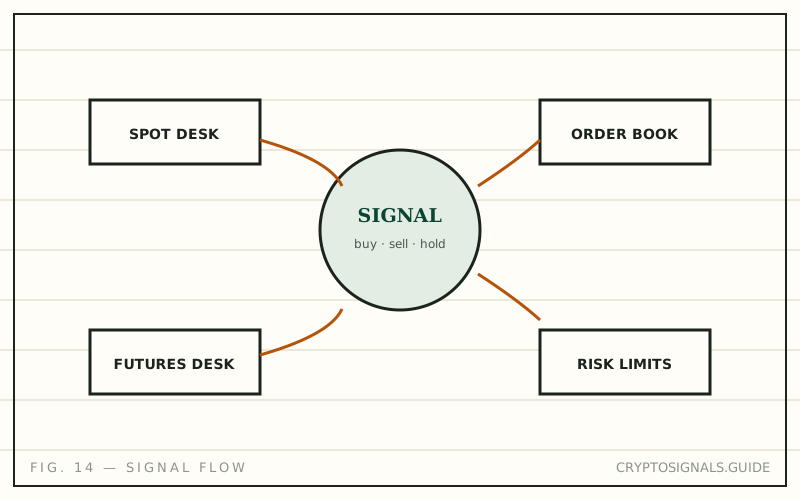
Zignaly is a browser-based copy-trading platform. You fund an account, choose a profit-sharing service run by a trader, allocate to it, and their positions get mirrored into your slice. No entry zones to copy, no stop-loss to punch in, no Telegram notification to miss at 3am. The minimum allocation is $10, which is the lowest entry ticket we've come across in this category.
Two things sit on the menu. Profit-sharing services are individual traders you can allocate to, each carrying Zignaly's own Z-Score rating. Z-Indexes are basket-style allocations for people who don't want to pick one operator. That's it. If you are hunting for something else you read about, keep reading — it probably no longer exists.
Where the signal marketplace went
Here's the update that most Zignaly coverage hasn't made. As of 2026 the company states plainly that it no longer offers a signal-provider marketplace or DIY bots. Search results are full of guides describing both features in the present tense. They're describing a product from a previous era.
This is worth more than a footnote, because Zignaly isn't the only one. The open signal marketplace — anyone lists a feed, subscribers pay per feed, the platform takes a slice — was everywhere around 2020 and is largely gone. Quality control was impossible, the incentive rewarded volume over good trades, and the platform ate the reputational damage for every bad seller on it. Our breakdown of signals vs copy trading vs bots covers where each model landed.
Practical consequence: if you came here wanting to plug an existing Telegram signal feed into automated execution, Zignaly is the wrong door. That job belongs to a signal-execution bot like Cornix, or to the wider field in our signal bot ranking.
Pricing: nothing up front, a cut of the profit
As of this update, the cost structure looks like this:
| What you pay for | Cost (July 2026) | Notes |
|---|---|---|
| Platform access | $0 | No monthly or annual subscription |
| Minimum allocation | $10 | Lowest entry ticket in this category |
| Success fee | % of profit | Set per service — check before allocating |
| Signal marketplace / DIY bots | — | No longer offered |
The alignment beats a flat VIP subscription. A Telegram room charging $150 a month gets paid identically whether you profit or get liquidated; a profit-sharing trader gets paid only on gains. That removes the worst incentive in this business — churning subscribers with hype.
Two caveats before you call it free. Ask how losses carry forward: if a service loses 20% in month one, gains 20% in month two and still charges a fee on the rebound, you paid for a round trip to nowhere. And profit fees bite hardest in chop, where you pay on up months and absorb down months in full.
Z-Score, Z-Indexes and what you're actually picking
On a Telegram channel you evaluate a call. Here you evaluate a person, through a rating. Z-Score is Zignaly's in-house ranking of its profit-sharing services, and it's a reasonable first filter — but it is calculated by the company that earns when you allocate. Treat it the way you'd treat a shop's own "staff pick" shelf.
Four things to check yourself, in this order: how long the history runs (six months of a bull market proves nothing), maximum drawdown rather than headline return, whether losing months are visible at all, and how much money already follows the trader — a strategy in thin altcoins degrades as its crowd grows. Our guide to vetting a signal provider turns that into a ten-minute checklist.
Claimed vs verified performance
There is no headline win rate to fact-check here, which makes Zignaly unusual in this series. It doesn't advertise "92% accuracy" anywhere — performance is presented per trader, inside the app, and it is provider-reported. We have not independently audited those numbers, and we know of no third party that has.
So Zignaly gets no row in our accuracy tracker: that table needs a claimed figure and a tracked figure, and this platform supplies neither. Read that honestly in both directions. The absence of an inflated marketing number is a mild point in its favour — nobody is promising you 90%. The absence of any externally verified record is a real limitation, and it is the main reason a well-built platform lands at 6.0 rather than higher.
Who Zignaly suits
A reasonable fit if: you want exposure to someone else's trading without a monthly bill, you'd rather pay on results than on access, and you're happy to do the due diligence on an individual trader instead of a brand. The $10 minimum makes it a cheap way to watch a strategy behave with real money on the line, which beats reading its marketing page.
Look elsewhere if: you want to learn to trade — copy trading teaches you nothing, because you never see why a position opened. Skip it too if you need a readable signal feed you can adapt and route into your own bot, or if independent verification is your bar for handing over money.
Where it's strong
- No subscription — the operator earns only on profit
- $10 minimum makes real-money testing cheap
- No hyped win-rate claim to unwind
- Execution is automatic: no missed entries, no fat fingers
- Z-Indexes spread risk across traders instead of one ego
Where it isn't
- Signal marketplace and DIY bots discontinued — old guides mislead
- No independently verified performance record
- Z-Score is scored by the party that profits from allocations
- Refer-a-Friend terms aren't public
- You learn nothing about trading by following it
Alternatives worth comparing
- Bybit Copy Trading — exchange-native copy trading with trader stats generated by the venue holding the funds.
- Binance Copy Trading — the largest pool of copyable traders, with the deepest liquidity behind it.
- 3Commas — if what you actually wanted was the bot builder Zignaly retired.
Still deciding between models? Read signals vs copy trading vs bots, or scan the wider field in our bots and automation ranking.
How we scored it: 6.0/10
Against our scoring weights: verified performance is the hole — no third-party track record exists, so that 35% block sits at the neutral middle. Transparency is mixed: the company is upfront that the marketplace and DIY bots are gone, but per-trader statistics are self-published and referral terms aren't. Pricing and value score well — a success fee with a $10 floor is the friendliest structure we've reviewed. Risk practices are decent: no leverage evangelism, no lifetime-deal pressure. Net 6.0: a sound platform waiting on evidence.
Zignaly FAQ
Does Zignaly still have a signal marketplace?
No. In 2026 Zignaly states it no longer offers a signal-provider marketplace or DIY bots. Listicles that still describe those features are stale. Copy trading through profit-sharing services and Z-Indexes is what remains.
How much does Zignaly cost?
No subscription. You pay a success fee out of profits, and the minimum allocation is $10. The percentage varies by service, so read the individual service page before you fund anything.
Is Zignaly legit?
It's a real, operating platform, and its fee model only pays the operator when a strategy gains. What we can't confirm is performance — no independent audit of Zignaly trader results exists, so in-app statistics are provider-reported.
What is a Z-Score on Zignaly?
Zignaly's own rating for the profit-sharing services on the platform. Fine as a first filter, but the scorer earns when you allocate — check history length, drawdown and whether losing months are visible before trusting it.
Is $10 really enough to start?
Enough to watch a service behave with real money at stake, which is the smart way to use a low minimum. Not enough to earn anything worth counting, and tiny allocations can round awkwardly on position sizing.
Crypto assets are volatile and largely unregulated. Copy-trading services — including every trader listed on Zignaly — can and do post losing streaks, and a profit-sharing structure does not protect your capital from drawdown. Never trade with money you cannot afford to lose, and never treat a rating on any platform as a guarantee of profit.
We test crypto signal providers with real subscriptions and log every published call — entries, stops and targets — before scoring anyone. Read how we test →