
Affiliate disclosure: Fat Pig Signals advertises an affiliate program on its site, but the terms aren't public and we currently earn nothing from it. Some other links on this page are affiliate links, marked per our disclosure policy. Scores follow our testing methodology either way — this one scores high because of its track record, not its business terms.
- Platform
- Telegram — free channel + paid VIP
- Focus
- Spot BTC + altcoins, up to 6 take-profit targets
- Pricing (July 2026)
- 0.5 ETH/3mo · 0.75 ETH/6mo · 1.25 ETH/12mo
- Track record
- Public since 2018 — losses included
- Independently tracked
- No third-party count, but self-published log is loss-inclusive
- Audience
- Disputed: 7k–50k depending on source
- Affiliate program
- Yes — terms undisclosed
- Risk level
- Lower — spot only, verifiable history
Fat Pig Signals earns the second-highest score we've given a human signal channel for one structural reason: it makes itself checkable. A loss-inclusive public record since 2018, spot-only trades with defined stops, and a format built for staged exits. The caveats are real but secondary — ETH-denominated pricing makes your dollar cost ride the ETH chart, and subscriber counts vary wildly by source. If you're going to pay any human channel, this is what the trustworthy end of the market looks like.
What Fat Pig Signals is
Fat Pig Signals is a Telegram signal channel — free public feed plus paid VIP group — that has been calling spot trades on BTC and altcoins since 2018. No leverage evangelism, no futures scalping: entries, stop-losses, and up to six take-profit targets per position, designed for scaling out in stages rather than all-or-nothing exits.
Plenty of channels match that surface description. What separates this one is a policy decision made years ago and maintained since: the results ledger stays public, and the red rows stay in it.
The track record: why losses matter
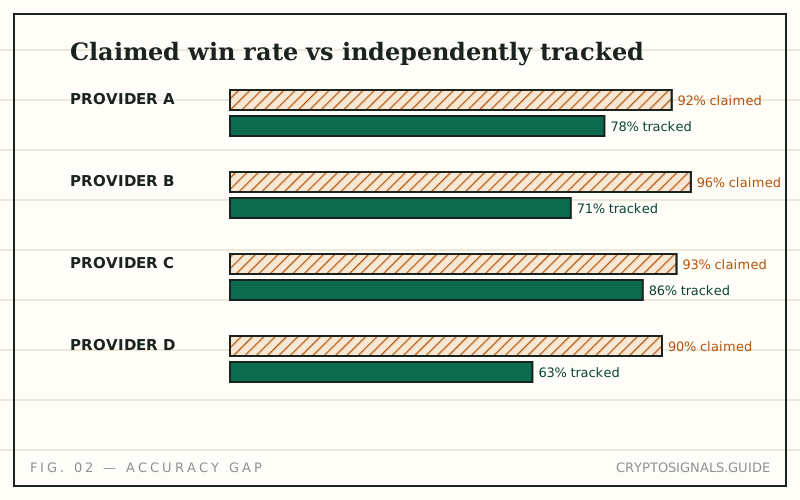
Every provider claims transparency; almost none survive the follow-up question. Fat Pig's answer has been the same since 2018: a published record of its calls, wins and losses both. We haven't found an independent third-party count of its trades — so we won't quote a verified win rate, and its accuracy tracker entry carries that caveat — but a self-published log that keeps the losers in is a categorically different object from a marketing percentage. Anyone with patience can audit it, and retroactive deletion would be visible to long-time subscribers.
The incentive logic makes loss-inclusive records rare: a channel that hides losses can claim anything; a channel that shows them caps its own marketing at reality. Choosing the second is the strongest honesty signal in this business — the top criterion in our provider vetting checklist, with Fat Pig as the reference example.
Pricing in ETH — and its hidden variable
Subscriptions are denominated in ETH, not dollars:
| Plan | Price (July 2026) | Effective per month |
|---|---|---|
| 3 months | 0.5 ETH | ~0.167 ETH |
| 6 months | 0.75 ETH | 0.125 ETH |
| 12 months | 1.25 ETH | ~0.104 ETH |
The quirk deserves arithmetic. Because the price tag is in ETH, your dollar cost floats: if ETH rallies 40% the week before you renew, the same 1.25 ETH annual plan costs 40% more dollars; after an ETH drawdown, it's cheaper. You're effectively short a little ETH volatility on every renewal date. Crypto-native subscribers who already hold ETH may not care — they're paying from the same asset base. Dollar-budgeted readers should check the current ETH price and do the multiplication before subscribing, then compare against fiat-priced services in our paid signals table. Crypto payment also means no chargebacks — standard for the niche, still worth saying.
What the signals look like
A typical Fat Pig call: pair, spot entry zone, stop-loss, and up to six take-profit levels. The six-target ladder is the house signature — it pushes subscribers toward staged exits, banking partial profit while letting the tail of the position run. That's a risk-management posture baked into the signal format itself, and it parses cleanly into automation tools like Cornix for anyone who'd rather not babysit six limit orders.
Spot-only matters just as much. With no leverage, the worst case on a position is the distance to your stop — not liquidation. The trade-off is pace: spot swing trades resolve in days or weeks, not minutes. If you're hunting adrenaline, this isn't the channel; the arithmetic of why that's a feature lives in how to read crypto signals.
The caveats: subscriber math and affiliate opacity
- Nobody agrees how big it is. Sources put the audience anywhere from 7,000 to 50,000 subscribers — a 7x spread, likely from counting different channels at different times. We won't launder any of those numbers into a fact; the divergence is the only thing we can verify.
- Affiliate terms are undisclosed. The site advertises a partner program without publishing conditions. Mildly ironic for the transparency benchmark, and worth fixing.
- No third-party audit. The log is self-published. We weight it highly because it's loss-inclusive, but an independent count would close the loop — and we'd publish it in the tracker the day it exists.
- ETH-priced renewals. Covered above — a real cost variable, not a red flag.
Who Fat Pig Signals suits
A strong fit if: you want spot swing trades on BTC and alts with honest bookkeeping, you hold ETH or accept the currency quirk, and you value a provider you can audit over one that promises the moon. The staged-exit format also suits anyone learning position management — you watch risk being managed, not just direction being called.
Look elsewhere if: you want leveraged futures action (see the futures signals ranking — with our warnings attached), you need a fiat price that stays fixed in dollars, or a channel without a third-party audit is disqualifying even with a loss-inclusive log.
Where it's strong
- Public, loss-inclusive track record since 2018 — the niche benchmark
- Spot-only: no liquidation risk baked into the product
- Up to 6 TPs enforce staged, disciplined exits
- Format parses cleanly into auto-trading tools
- Survived two full market cycles under the same name
Where it isn't
- ETH-denominated pricing — dollar cost floats with the market
- Subscriber count unverifiable: 7k–50k depending on source
- Affiliate program exists but terms undisclosed
- Self-published log, no independent third-party count yet
- Crypto-only payment, no chargeback path
Alternatives worth comparing
- WolfxSignals — the other transparency story we track: a claimed rate that mostly survived an independent count.
- Universal Crypto Signals — same 2018 vintage and fiat pricing, but without the loss-inclusive log.
- Binance Killers — the scale-and-marketing contrast: bigger audience, inflated claims, double the effective price.
Category context in the Telegram channels ranking; spot-focused peers in spot signals.
How we scored it: 7.8/10
Through the methodology weights: transparency (25%) scores near the ceiling — a loss-inclusive public record since 2018 is exactly what that weight exists to reward. Verified performance (35%) scores well but not perfectly: the log is real and auditable, yet still self-published, and we discount for the missing third-party count. Risk practices benefit from the spot-only, staged-exit design. Deductions: floating ETH cost, the 7k–50k subscriber fog, undisclosed affiliate terms. Net 7.8 — the top of our human-channel range, held under 8 only by the absence of independent auditing. No channel gets 9+ from us; a third-party count could move this one closer.
Fat Pig Signals FAQ
Is Fat Pig Signals legit?
By the standard that matters — checkability — yes. It has published its results including losses since 2018, which is the single strongest honesty signal a provider can give. Legit doesn't mean every quarter is profitable; it means you can find out.
How much does it cost in dollars?
That depends on ETH the day you pay: plans run 0.5 ETH/3 months, 0.75 ETH/6 months, 1.25 ETH/12 months as of July 2026. Multiply by the current ETH price before subscribing — the dollar figure moves with the market.
Why price a subscription in ETH at all?
It fits the channel's crypto-native identity, but economically it hands you the ETH price risk: rallies make renewals dearer in dollars, drawdowns cheaper. If you already hold ETH, it's budget-neutral; if you think in dollars, it's a variable to price.
How many subscribers does it really have?
Unknown — sources scatter from roughly 7,000 to 50,000. We report the spread rather than pick a flattering point in it. Channel size doesn't change trade quality either way.
What's the verified win rate?
There's no independent third-party count yet, so we won't print a percentage. What exists — and what almost no rival offers — is a self-published, loss-inclusive log you can count yourself. Status in our accuracy tracker: log public, externally unverified.
Can I automate Fat Pig's signals?
Yes — the entry/stop/multi-TP structure is what tools like Cornix parse natively, and automation handles the six-target ladder better than manual order juggling.
Crypto assets are volatile and largely unregulated. Signal services — including Fat Pig Signals — can and do post losing streaks; its own published history proves it. Never trade with money you cannot afford to lose, and never treat a paid subscription as a guarantee of profit.
We test crypto signal providers with real subscriptions and log every published call — entries, stops and targets — before scoring anyone. Read how we test →