
Affiliate disclosure: LuxAlgo runs a 30% recurring affiliate program with a 60-day cookie and PayPal payouts, and we participate — subscribe through our links and we earn a share at no extra cost to you. It does not move the score: weights are fixed in our testing methodology, which is why the unresolved repainting question sits in this review rather than being tidied away.
- Platform
- TradingView indicators + Discord community
- Category
- Paid indicator suite (SaaS)
- Pricing (July 2026)
- Premium $39.99/mo ($27.99/mo annual) · Ultimate $59.99/mo
- Toolset
- Signals & Overlays, Oscillator Matrix, AI Backtesting
- Signal delivery
- On-chart markers and alerts — not a call channel
- Fund custody
- None — no exchange API keys, no deposits
- Affiliate program
- Yes — 30% recurring, 60-day cookie (we participate)
- Risk level
- Moderate — no custody risk; performance unverified
LuxAlgo is a legitimate paid indicator suite and, structurally, one of the safer things you can buy in this niche: no deposit, no API keys, and signals generated from public price data that you can replay and count for yourself. Score it 7.5 — strong on transparency, fair on price, and capped by the fact that no independent live track record exists and repainting behaviour is something you have to verify rather than take on faith. Buy a month, log fifty signals, then decide.
What LuxAlgo actually sells
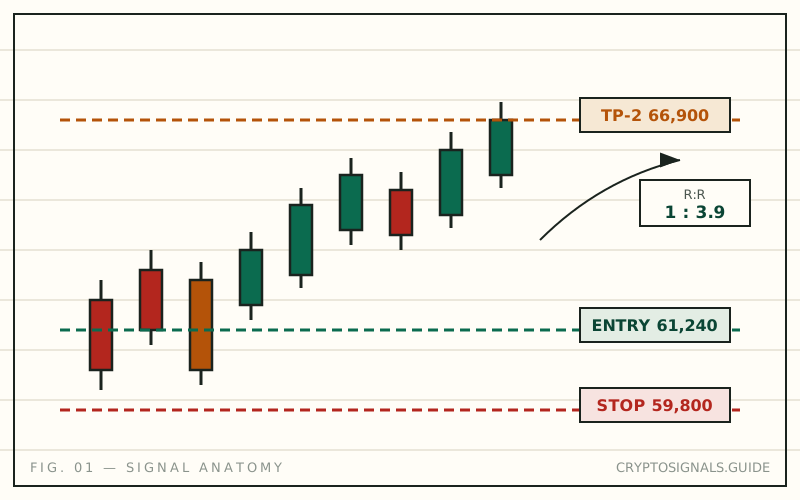
LuxAlgo is a set of paid TradingView indicators, not a signal channel. You subscribe, the scripts unlock inside your own TradingView account, and from then on the buy and sell markers appear on charts you control. There is a Discord community attached for setup questions and screenshots, but the product lives on the chart.
Three components carry the suite. Signals & Overlays plots the entry markers, trend bands and support/resistance levels most subscribers buy it for. Oscillator Matrix handles momentum, divergences and reversal warnings. The AI Backtesting layer runs parameter combinations over past price and reports which settings performed best on the instrument you're looking at.
Nothing here touches your money: no API keys, no exchange connection, no custody — a materially different risk profile from bot platforms that hold trading keys.
Pricing: Premium versus Ultimate
As of this update:
| Plan | Monthly billing | Annual billing |
|---|---|---|
| Premium | $39.99/mo | $27.99/mo equivalent |
| Ultimate | $59.99/mo | Discounted annually |
The annual discount is the number to weigh: $27.99 versus $39.99 is a 30% cut, but it also means roughly $336 up front for a tool you may abandon in week three. Take one month, run the suite on charts you already trade, and only annualize if you can name decisions it improved. For scale, altFINS charges $29 a month for Essential analytics — the category price is consistent; what differs is what you do with it. And TradingView is a separate bill: alerts and multiple indicators per chart push most serious users onto a paid plan, so budget the stack, not the sticker.
What the signals look like in practice
A LuxAlgo chart gives you a marker, not an instruction. No entry zone, no laddered take-profit list, no suggested leverage of the kind a Telegram VIP posts — just a plotted signal at a bar close, context from the overlays, and the responsibility for stop placement and size.
That cuts both ways. It's more work than copying a call, and it forces the part most subscribers skip: deciding in advance where you're wrong. If you've never sized a trade off your own stop, read how to read a crypto signal and technical analysis signals first.
The reason it scores well: you can test it yourself
Most of this niche asks for trust. A channel posts winning screenshots, claims 90-something percent, and there is no way for you to reconstruct the record. An indicator suite is different: the signals are generated by a script running on public price data, so you can check them without asking anyone's permission.
The routine we'd run on any paid indicator, LuxAlgo included:
- Bar replay, not hindsight. Step forward bar by bar on a pair you trade and log where the marker appeared at the time, not where it looks like it appeared on the finished chart.
- Test for repainting. Note the signal on the live candle, then check the same spot after that candle closes and again a day later. If markers move, appear or vanish after the fact, the backtest you're admiring is fiction. Every vendor in this category attracts repainting complaints; this settles it for your settings.
- Count the losers. Fifty signals with entries, stops and outcomes, fees included — a weekend of work worth more than every testimonial ever posted.
- Treat AI Backtesting as a hypothesis generator. Optimised parameters fit the past by construction. Validate forward on data the optimiser never saw.
Verifiability moves the burden of proof, which is why it earns points here — the same logic behind our accuracy tracker.
Where it falls short
An indicator is not a strategy. LuxAlgo doesn't size your position, doesn't manage a losing one, and can't know your account or timeframe. Two traders on identical settings can end the month one green, one red, purely on execution.
Beyond that: no published, loss-inclusive live record exists, so performance is whatever the suite produces in your hands. The Discord adds social pressure — a room posting wins nudges you into trades you'd otherwise skip. And "AI" here means parameter optimisation over price history, not prediction, a distinction we unpack in AI versus human signals.
Where it's strong
- Output is checkable on your own charts — no trust required
- No exchange API keys, no custody, no deposit
- $27.99–$59.99/mo sits mid-market for the category
- Runs inside TradingView, fitting an existing workflow
- Backtesting layer makes assumptions explicit and testable
Where it isn't
- No independent, loss-inclusive live track record
- Repainting concerns are unresolved until you test them yourself
- Indicators supply signals, not risk management or sizing
- Requires a paid TradingView plan for serious use
- Annual billing locks in $300+ before you know it suits you
Who LuxAlgo suits
Worth $40 if: you already trade off charts, you have a stop-loss habit, and you want a structured toolkit plus a backtesting harness instead of someone else's calls. It's also a sane first paid product for anyone done with Telegram VIP groups.
Skip it if: you want entries and targets pushed to your phone — different product, ranked in our buy and sell signals guide. Skip it too if you're brand new: paying for indicators before you can place a stop is an expensive way to learn what crypto signals are.
Alternatives worth comparing
- altFINS — screener-plus-signals analytics with a free tier and Essential at $29/mo; less chart-native, more scanning.
- Dash 2 Trade — freemium analytics and bot tooling for traders who'd rather not pay before testing.
- Token Metrics — AI ratings and signals instead of chart overlays, with a more divided user base.
Wider context: the AI crypto signals ranking, plus free versus paid signals.
How we scored it: 7.5/10
Against our scoring weights, LuxAlgo earns its margin on transparency and risk practices: it does what it says, takes no custody, and any subscriber can validate the output with TradingView replay. Pricing is fair for the category. What holds it under 8 is verified performance — no continuously published, loss-inclusive record exists, so we can't say the suite makes money, only that its claims are testable. Add the unresolved repainting question and 7.5 is the honest number.
LuxAlgo FAQ
Is LuxAlgo legit or a scam?
Legit as a software product: real TradingView indicators, transparent pricing, no custody of your funds, and output you can verify yourself. What it is not is a profit guarantee — no independent, loss-inclusive track record of live results exists, so treat performance as unverified until you log it on your own charts.
How much does LuxAlgo cost in 2026?
As of July 2026, Premium is $39.99 per month, or the equivalent of $27.99 per month on annual billing, and Ultimate is $59.99 per month. Budget a paid TradingView plan on top if you want alerts and multiple indicators per chart.
Do LuxAlgo signals repaint?
We won't assert either way, because repainting depends on the script, the settings and the timeframe you run. Settle it in ten minutes: note a signal on the live candle, then re-check the same bar after it closes and again the next day. If markers shift or disappear, any backtest built on them is worthless.
Is Premium enough, or do I need Ultimate?
Start on Premium. The core Signals & Overlays and Oscillator Matrix work most people actually use is there, and until you've logged fifty signals you have no basis for deciding which extra tooling is worth another $20 a month.
Can LuxAlgo trade automatically for me?
Not by itself — it plots and alerts, it doesn't place orders. To automate you'd pipe TradingView alerts into an execution layer such as 3Commas or WunderTrading, which adds exchange API-key risk that LuxAlgo alone doesn't carry.
Crypto assets are volatile and largely unregulated. Indicator suites — LuxAlgo included — produce losing signals, and optimised backtests routinely flatter what happens live. Never trade with money you cannot afford to lose, and never treat a subscription as a guarantee of profit.
We test crypto signal providers with real subscriptions and log every published call — entries, stops and targets — before scoring anyone. Read how we test →